Search
Prolay Nandi

Prolay Nandi

Research Scholar Department of Sanskrit and Philosophy, Ramakrishna Mission Vivekananda Educational and Research Institute, Belur Math, Howrah, West Bengal

3 pieces of writing 0 followers

Œuvre

Complete categorized corpus of academic papers, philosophical discourses, literary works, published books, lectures, and institutional appointments.

3 Total Works 2 Categories

Peer-Reviewed Journal Articles 2 Articles

Published in PIJCACE — Poorvam International Journal of Classical & Contemporary Academic Studies

PIJCACE Vol. 2, No. 1 Aesthetics and Art Philosophy Open Access Jun 05, 2026

Śrī Caitanya Deva as a Connoisseur of Sāhitya Śāstra: A Critical Study of the Pañcadoṣa and Pañcālaṅkāra in Keśava Bhaṭṭa's Verse

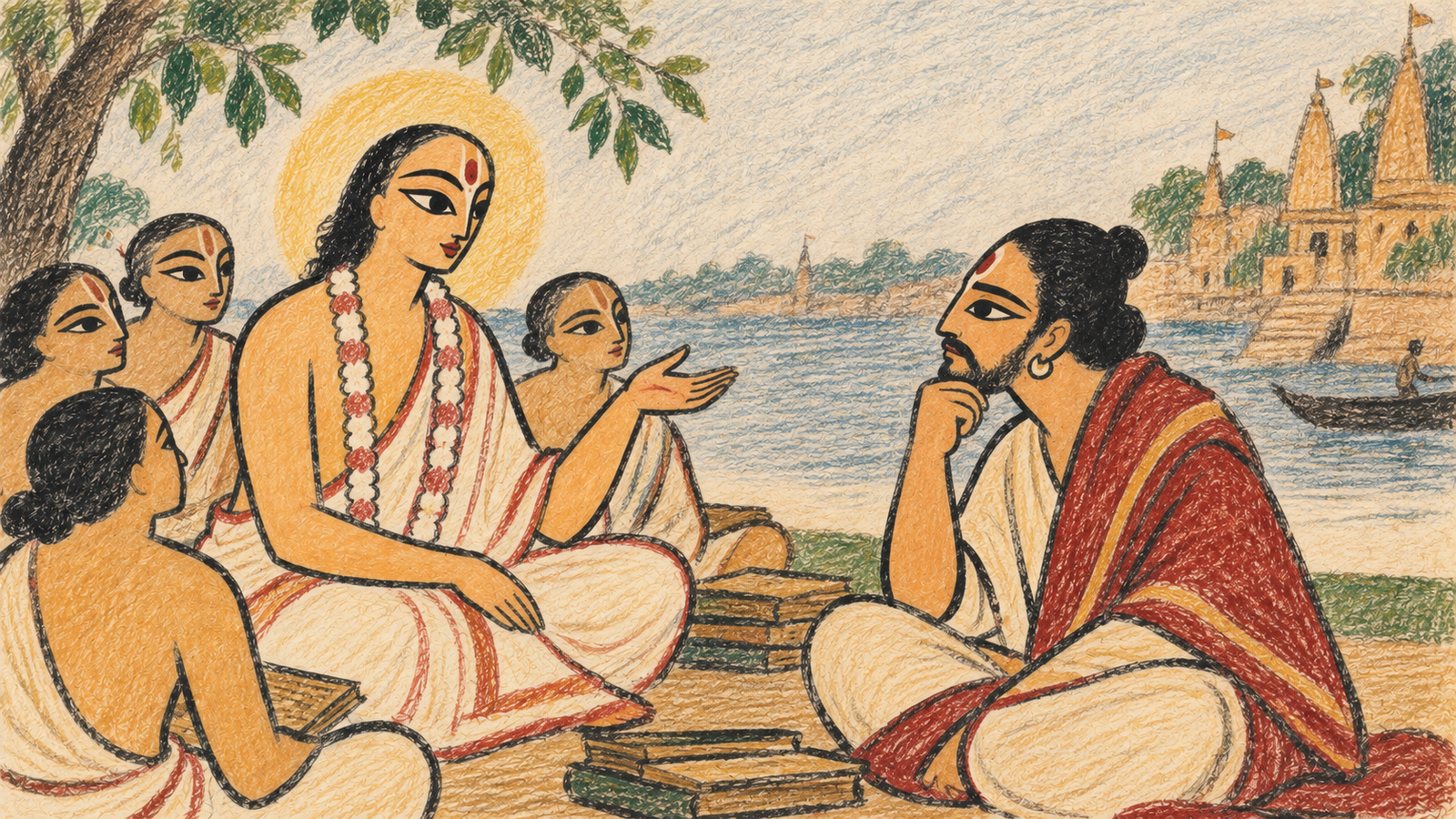
Śrī Caitanya Deva, revered in Gauḍīya Vaiṣṇava tradition as the combined manifestation of Śrī Kṛṣṇa and Śrī Rādhā, is widely recognized for his philosophical contributions and devotional movement. This article highlights a less-explored dimension of his genius–his profound mastery of Sāhitya Śāstra (literary theory and poetics)–through a critical examination of his scholarly encounter with the Kashmirian digvijayī scholar Keśava Bhaṭṭa, as detailed in Śrī Caitanya Caritāmṛta and Caitanya Bhāgavata. During their meeting on the banks of the Gaṅgā, Keśava Bhaṭṭa, renowned for his extemporaneous composition (ghaṭikāśataka), composed one hundred verses glorifying the Gaṅgā. Caitanya selected one verse in the Śikharinī metre and subjected it to a masterful critique based on the principles of Alaṅkāraśāstra. He identified five poetic defects (pañcadoṣa)–two instances of avimṛṣṭavidheyāṃśa, viruddhamatikṛt, bhagnakrama, and punarātta–and five literary ornaments (pañcālaṅkāra): anuprāsa (alliteration), punaruktavadābhāsa, upamā (simile), virodhābhāsa (semblance of contradiction), and anumāna (inference). The article provides detailed definitions and textual analysis of each doṣa and alaṅkāra, drawing from authoritative texts like Sāhityadarpaṇa and Alaṅkārakaustubha. It demonstrates how Caitanya’s analysis reveals both the aesthetic strengths and compositional flaws of the verse, underscoring the primacy of doṣa-guṇa vicāra (critical evaluation of defects and merits) in poetic composition. This episode not only affirms Caitanya’s extraordinary erudition in Sanskrit poetics alongside grammar and philosophy but also exemplifies his humility and spiritual magnetism, which ultimately led to Keśava Bhaṭṭa’s surrender. The study thus illuminates Caitanya’s multifaceted brilliance as a consummate connoisseur of Sāhitya Śāstra.


8 min read DOI: 10.63752/pijcace.0201S01 Dr. Rakesh Das, Prolay Nandi 456 41
Volume 2, Issue 1 (Summer 2026)
PIJCACE Vol. 1, No. 2 Aesthetics and Art Philosophy Open Access Mar 07, 2026

Sādhāraṇīkaraṇa : Underlying Process for Experiencing Rasa

This article examines the concept of sādhāraṇīkaraṇa (generalization) as the indispensable condition for the experience of rasa in classical Indian poetics. While rasa is traditionally regarded as the soul of poetry, its realization requires the dissolution of specific spatial, temporal, and personal associations embedded in poetic elements such as vibhāva, anubhāva, vyabhicāribhāva, and sthāyibhāva. Through the process of generalization, these elements are freed from worldly limitations, allowing the sahṛdaya to experience emotions in a purified, universalized form. The study further argues that sādhāraṇīkaraṇa operates through a distinctive mode of aesthetic cognition that cannot be reduced to ordinary forms of knowledge such as illusion, doubt, or resemblance. By temporarily transcending self–other distinctions and worldly dualities, aesthetic experience approaches a Vedāntic state of non-duality and bliss. Thus, sādhāraṇīkaraṇa is shown to function not merely as a poetic mechanism but as a bridge between aesthetic enjoyment and metaphysical insight.

5 min read DOI: 10.63752/pijcace.0102W02 Dr Rakesh Das, Prolay Nandi 1,267 53
Volume 1, Issue 2 (Winter 2025)

Literary Works & Creative Writing 1 Work

Published in Anupurvi — Literature in Bengali, Hindi & Sanskrit (আনুপূর্বী / आनुपूर्वी)

আনুপূর্বী বাংলা Essays & Discourses 24 Sep 2026

শ্রীচৈতন্যদেবের সাহিত্যশাস্ত্রে পাণ্ডিত্য: কেশবভট্টের শ্লোকে পঞ্চদোষ ও পঞ্চালঙ্কার বিচার

গৌড়ীয় বৈষ্ণব সমাজে শ্রীচৈতন্যদেব ভক্তিমার্গের প্রবর্তক ও অবতাররূপে সুপরিচিত, কিন্তু সংস্কৃত সাহিত্যশাস্ত্রে তাঁর পাণ্ডিত্যের দিকটি তুলনায় অনালোচিত। শ্রীশ্রীচৈতন্যচরিতামৃত ও চৈতন্যভাগবত-এর বর্ণনা অনুসারে, দিগ্বিজয়ী কেশবভট্টের সদ্যোরচিত গঙ্গাস্তুতি-শ্লোক বিশ্লেষণ করে নিমাই পণ্ডিত তাতে পাঁচটি দোষ (অবিমৃষ্টবিধেয়াংশ, বিরুদ্ধমতিকৃৎ, পুনরাত্ত ও ভগ্নক্রম) এবং পাঁচটি অলঙ্কার (অনুপ্রাস, পুনরুক্তবদাভাস, উপমা, বিরোধাভাস ও অনুমান) নির্দেশ করেছিলেন। এই প্রবন্ধে সাহিত্যদর্পণ ও অলঙ্কারকৌস্তুভ-এর আলোকে সেই বিচার পুনরায় পরীক্ষা করা হয়েছে। এর মাধ্যমে দেখানো হয়েছে যে, ব্যাকরণের অধ্যাপক হিসেবে পরিচিত চৈতন্যদেব অলঙ্কারশাস্ত্রেও গভীর দক্ষতার অধিকারী ছিলেন।

বাংলা edition 741 reads
বাংলা literature

শ্রীচৈতন্যদেবের সাহিত্যশাস্ত্রে পাণ্ডিত্য: কেশবভট্টের শ্লোকে পঞ্চদোষ ও পঞ্চালঙ্কার বিচার

গৌড়ীয় বৈষ্ণব সমাজে শ্রীচৈতন্যদেব ভক্তিমার্গের প্রবর্তক ও অবতাররূপে সুপরিচিত, কিন্তু সংস্কৃত সাহিত্যশাস্ত্রে তাঁর পাণ্ডিত্যের দিকটি তুলনায় অনালোচিত। শ্রীশ্রীচৈতন্যচরিতামৃত ও চৈতন্যভাগবত-এর বর্ণনা অনুসারে, দিগ্বিজয়ী কেশবভট্টের সদ্যোরচিত গঙ্গাস্তুতি-শ্লোক বিশ্লেষণ করে নিমাই পণ্ডিত তাতে পাঁচটি দোষ (অবিমৃষ্টবিধেয়াংশ, বিরুদ্ধমতিকৃৎ, পুনরাত্ত ও ভগ্নক্রম) এবং পাঁচটি অলঙ্কার (অনুপ্রাস, পুনরুক্তবদাভাস, উপমা, বিরোধাভাস ও অনুমান) নির্দেশ করেছিলেন। এই প্রবন্ধে সাহিত্যদর্পণ ও অলঙ্কারকৌস্তুভ-এর আলোকে সেই বিচার পুনরায় পরীক্ষা করা হয়েছে। এর মাধ্যমে দেখানো হয়েছে যে, ব্যাকরণের অধ্যাপক হিসেবে পরিচিত চৈতন্যদেব অলঙ্কারশাস্ত্রেও গভীর দক্ষতার অধিকারী ছিলেন।

Read

Śrī Caitanya Deva as a Connoisseur of Sāhitya Śāstra: A Critical Study of the Pañcadoṣa and Pañcālaṅkāra in Keśava Bhaṭṭa's Verse

Śrī Caitanya Deva, revered in Gauḍīya Vaiṣṇava tradition as the combined manifestation of Śrī Kṛṣṇa and Śrī Rādhā, is widely recognized for his philosophical contributions and devotional movement. This article highlights a less-explored dimension of his genius–his profound mastery of Sāhitya Śāstra (literary theory and poetics)–through a critical examination of his scholarly encounter with the Kashmirian digvijayī scholar Keśava Bhaṭṭa, as detailed in Śrī Caitanya Caritāmṛta and Caitanya Bhāgavata. During their meeting on the banks of the Gaṅgā, Keśava Bhaṭṭa, renowned for his extemporaneous composition (ghaṭikāśataka), composed one hundred verses glorifying the Gaṅgā. Caitanya selected one verse in the Śikharinī metre and subjected it to a masterful critique based on the principles of Alaṅkāraśāstra. He identified five poetic defects (pañcadoṣa)–two instances of avimṛṣṭavidheyāṃśa, viruddhamatikṛt, bhagnakrama, and punarātta–and five literary ornaments (pañcālaṅkāra): anuprāsa (alliteration), punaruktavadābhāsa, upamā (simile), virodhābhāsa (semblance of contradiction), and anumāna (inference). The article provides detailed definitions and textual analysis of each doṣa and alaṅkāra, drawing from authoritative texts like Sāhityadarpaṇa and Alaṅkārakaustubha. It demonstrates how Caitanya’s analysis reveals both the aesthetic strengths and compositional flaws of the verse, underscoring the primacy of doṣa-guṇa vicāra (critical evaluation of defects and merits) in poetic composition. This episode not only affirms Caitanya’s extraordinary erudition in Sanskrit poetics alongside grammar and philosophy but also exemplifies his humility and spiritual magnetism, which ultimately led to Keśava Bhaṭṭa’s surrender. The study thus illuminates Caitanya’s multifaceted brilliance as a consummate connoisseur of Sāhitya Śāstra.
Read

Sādhāraṇīkaraṇa : Underlying Process for Experiencing Rasa

This article examines the concept of sādhāraṇīkaraṇa (generalization) as the indispensable condition for the experience of rasa in classical Indian poetics. While rasa is traditionally regarded as the soul of poetry, its realization requires the dissolution of specific spatial, temporal, and personal associations embedded in poetic elements such as vibhāva, anubhāva, vyabhicāribhāva, and sthāyibhāva. Through the process of generalization, these elements are freed from worldly limitations, allowing the sahṛdaya to experience emotions in a purified, universalized form. The study further argues that sādhāraṇīkaraṇa operates through a distinctive mode of aesthetic cognition that cannot be reduced to ordinary forms of knowledge such as illusion, doubt, or resemblance. By temporarily transcending self–other distinctions and worldly dualities, aesthetic experience approaches a Vedāntic state of non-duality and bliss. Thus, sādhāraṇīkaraṇa is shown to function not merely as a poetic mechanism but as a bridge between aesthetic enjoyment and metaphysical insight.

Read

Work

Contributor
Research Scholar Department of Sanskrit and Philosophy, Ramakrishna Mission Vivekananda Educational and Research Institute, Belur Math, Howrah, West Bengal

IDs

  • Poorvam ID: PV-2026-1202

Contact

prolay.nandi.vedvid@gmail.com