Authors in Conversation
Enrollment Open
A peer-reviewed biannual journal publishing research, critique, and creative expression at the intersection of classical traditions and contemporary thought.
Join our hybrid seminars where scholars, artists, and practitioners from across the globe gather to explore the living traditions of Indian heritage in contemporary and digital arts.
View All Events
Authors in Conversation
Enrollment Open
Cite It
Enrollment Open
Authors in Conversations
Enrollment Open
Speaker
Jonardon Ganeri is the Bimal. K. Matilal Distinguished Professor of Philosophy at the Univ…
Fernando Pessoa: Imagination and the Self – A Di…
Speaker
Nirmalya Narayan Chakraborty is presently Vice-Chancellor of Presidency University, Kolkat…
Cite It: A Cautionary Note on Matilal’s Way of D…
Speaker
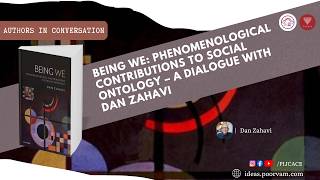
Dan Zahavi is a Professor of Philosophy and director of the Center for Subjectivity Resear…
Being We: Phenomenological Contributions to Soci…
Speaker
Prof. Madhucchanda Sen is a Professor of Philosophy at Jadavpur University, where she has …
Exploring the Externalism and the Mental : A Dia…
Speaker
Prof. Jay L. Garfield FAHA is the Doris Silbert Professor in the Humanities and Professor …
Exploring the Subject as Freedom: A Dialogue wit…
Speaker
Prof. Nalini Bhushan is Andrew W. Mellon Professor Emerita in the Humanities and Professor…
Exploring the Subject as Freedom: A Dialogue wit…
Authors in Conversation
Poorvam International Journal is committed to maximum visibility and scholarly impact. Our content is discoverable through leading academic indexes and databases, ensuring global reach for researchers across every discipline.
DOI Registration & Global Registry
Published Content Integrity
Scholarly Literature Search
European Open Research Infrastructure
AI-Powered Research Discovery
Global Open Scholarly Metadata
Scientific Literature Database
Open Ukrainian Citation Index
Research Discovery by Editage
Publisher Verification
All indexing is independently verified. DOI prefix 10.63752/pijcace registered with Crossref.
This article examines the concept of sādhāraṇīkaraṇa (generalization) as the indispensable condition for the experience of rasa in classical Indian poetics. While rasa is traditionally regarded as the soul of poetry, its realization requires the dissolution of specific spatial, temporal, and personal associations embedded in poetic elements such as vibhāva, anubhāva, vyabhicāribhāva, and sthāyibhāva. Through the process of generalization, these elements are freed from worldly limitations, allowing the sahṛdaya to experience emotions in a purified, universalized form. The study further argues that sādhāraṇīkaraṇa operates through a distinctive mode of aesthetic cognition that cannot be reduced to ordinary forms of knowledge such as illusion, doubt, or resemblance. By temporarily transcending self–other distinctions and worldly dualities, aesthetic experience approaches a Vedāntic state of non-duality and bliss. Thus, sādhāraṇīkaraṇa is shown to function not merely as a poetic mechanism but as a bridge between aesthetic enjoyment and metaphysical insight.
This critical essay examines the metaphysical foundations of embodiment in Bharata's Nāṭyaśāstra, arguing that the sthānas, cārīs, and karaṇas are not merely physical movements but psychophysical embodiments of cosmic tattvas. Drawing on parallels between the cosmological unfolding described in Taittirīya Upaniṣad and the theatrical universe of nāṭya, this study demonstrates how Bharata systematically creates an 'extra-daily' performance dimension through consecrated space, non-empirical time (tāla), and embodied gravitational presence. The essay explores how expansion of space through sthānas manifests specific energies (rūpa and guṇa), how cārīs dynamically explore floor and aerial space, and how karaṇas serve as epistemological tools for acquiring embodied knowledge. Central to this analysis is the concept of Kaiśikī vṛtti, which transforms daily actions into extra-daily artistic expressions capable of generating alaukika rasa experience. This metaphysical framework reveals Bharata's system as a parallel universe creation on stage, where psychophysical embodiments serve the ultimate purpose of delivering dharmic teachings while elevating both performers and spectators beyond mundane emotional experiences.
This paper examines Pranab Kumar Sen's distinctive and comparatively lesser-known analysis of the concept of ideology, as articulated in his 1992 seminar paper "Philosophy, Science and Ideology," later included in Knowledge, Truth and Realism. While Sen is widely recognized for his contributions to debates on truth, meaning, logic, and the realism-anti-realism controversy, his reflections on ideology reveal a striking moment of intellectual courage. Against the prevailing and often populist invocations of ideology, Sen undertakes a conceptual inquiry into its very meaning. The paper focuses on one central issue Sen treats with seriousness: the relation between philosophy, science, and ideology. By identifying certain defining characteristics of ideology, such as dogmatism, closure to criticism, and resistance to self-correction, Sen argues that ideology is fundamentally incompatible with philosophy and science, both of which are essentially self-critical and epistemically open enterprises. This study reconstructs Sen's analysis of ideology without engaging the broader political-philosophical literature on the subject, as its primary concern is his conceptual framework. In doing so, it also offers a critical reflection on Sen's position, assessing its implications for understanding the normative role of philosophy in society.
Guru–Śiṣya paramparā is a revered tradition of learning through close mentorship. It is a system rooted in the concept of paramparā, representing an unbroken lineage of knowledge passed from guru to śiṣya through oral tradition. Each disciple becomes a custodian of their guru’s teachings and is entrusted with the responsibility of preserving, practising, and sharing the art form with future generations, ensuring its sustained evolution. This tradition reached its zenith after the enduring impact of the Trinity—Śrī Śyāmā Śāstri, Śrī Tyāgarāja, and Śrī Muttusvāmi Dīkṣitar—a heritage that inspired generations of composers to carry forward their legacy and enrich the field of Karnatic music. In order to acquire subtle knowledge and reach transcendental realms, it is a prerequisite to find a bona fide guru to ensure qualitative transmission of proficiency. At the same time, it is a coveted desire of every guru to look for the right disciple with whom they can share their knowledge and later impart advanced learning to sincere disciples. Vālājapēṭ Veṅkaṭaramaṇa Bhagavatar was one such devoted chief disciple of Saint Tyāgarāja. The current case study deals with the profound compositions of Vālājapēṭ Veṅkaṭaramaṇa Bhagavatar, the foremost disciple of Śrī Tyāgarāja. The article explores the melodic, thematic, and structural features of select compositions by Veṅkaṭaramaṇa Bhagavatar, highlighting his distinctive style and lasting contribution to the Karnatic music tradition.
This paper examines Krishna Baldev Vaid’s None Other (1992) through the lens of postmodern literary theory, focusing on the themes of suffering, alienation, and existential fragmentation. The novella presents the interior soliloquy of a nameless ageing protagonist whose reflections on pain, memory, and meaninglessness unfold without conventional plot or character development. By analysing the text’s fragmented narrative structure, intertextual references, and philosophical meditations, the study situates the work within the broader framework of postmodern literature. The protagonist’s monologue reflects a crisis of identity and purpose characteristic of postmodern consciousness, where certainty, truth, and stable meaning collapse into ambiguity. Drawing parallels with works such as T. S. Eliot’s Gerontion and Samuel Beckett’s Waiting for Godot, the essay explores how Vaid employs silence, repetition, and self-reflection to dramatize existential despair and the futility of human striving. Ultimately, the novella emerges as a lyrical yet unsettling meditation on loneliness, memory, and the fractured self, embodying the postmodern condition of uncertainty and the relentless search for meaning in an apparently indifferent universe.
This review essay examines Chatuh Shloki Manusmriti: An English Commentary by Nithin Sridhar, situating the work within the broader intellectual framework of the Indian śāstric tradition. The study analyses the author’s decision to interpret the philosophical architecture of the Manusaṃhitā through the first four verses of the opening chapter, read in light of the classical hermeneutic structure of anubandha catuṣṭaya. By foregrounding questions of adhikārī (qualified reader), prayojana (purpose), and viṣaya (subject matter), the essay argues that Sridhar’s work attempts to reintroduce contemporary readers—particularly those outside traditional modes of learning—to the conceptual world of Dharmaśāstra. The review further examines the methodological implications of employing the bhāṣya tradition as a modern interpretive tool and reflects on the distinction between śruti and smṛti, authorship, and authority within the Indian knowledge system. While acknowledging the book’s pedagogical strengths and its contribution to renewed discussions on the Manusmṛti, the essay also highlights certain translation and interpretive issues, suggesting that the text is best understood within the framework of śāstra pramāṇa rather than as an independent epistemic authority.
A constellation of interconnected platforms, publications, and people — all united by a commitment to open, ethical, and world-class scholarly exchange.
A unified platform for open scholarly communication — connecting authors, reviewers, and readers across disciplines.
Our flagship peer-reviewed biannual journal publishing research and creative expression at the intersection of arts and culture.
The publishing imprint of Poorvam — bringing scholarly monographs, edited volumes, and creative works to global audiences.
Carcā (चर्चा) extends the Poorvam knowledge network - A living space for dialogue and learning
Your destination for literary excellence, cultural commentary, and profound reflections from India and the world.
An open-access, peer-reviewed, multidisciplinary biannual e-journal publishing original research and creative scholarship by students across Science, Arts, and Commerce.
Are you a researcher or creative artist? Submit your manuscript and join our vibrant community.
Submit Your Work